
At more than 3,800 meters above sea level, in the heart of Salta’s Puna region, lies the Centenario-Ratones Salt Flat, located in Los Andes Department, in the northwestern part of the province of Salta. It is a vast landscape shaped by strong winds, dry air, and significant temperature variations. Despite these extreme conditions, the area is home to unique biodiversity, including species such as vicuñas, Andean flamingos, rheas, and foxes, alongside vegetation adapted to this high-altitude environment.
This territory is also home to the Kolla community, one of the Indigenous peoples that has inhabited the Andean region for generations. Their history, identity, and worldview are deeply connected to the land. For Andean peoples, the relationship with nature is built on respect, balance, and reciprocity. The knowledge, ceremonies, and traditions they continue to preserve today are part of a valuable cultural heritage passed down from generation to generation.
In Andean tradition, Pachamama holds a deeply significant place. The word comes from Quechua: “Pacha” refers to the world, the universe, time, and territory, while “Mama” means mother. Together, they represent nature as the origin and sustainer of life, providing water and food.
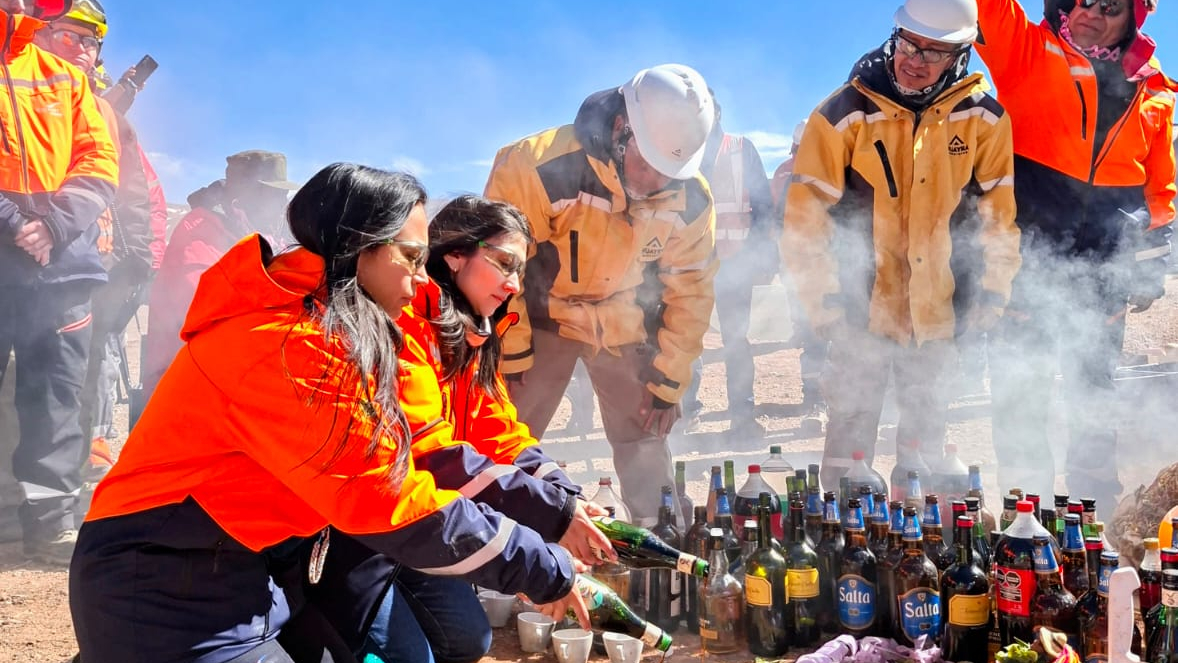
For this reason, every August 1, a ceremony of gratitude is held in which food, beverages, and other symbolic elements are offered as a way of giving thanks for what has been received and asking for well-being, health, prosperity, and abundance for the new cycle ahead. In Andean tradition, August is known as the month of Pachamama, as it is considered the beginning of a new cycle for the land and productive activities. Although the first day of the month is the most significant, ceremonies and offerings often continue throughout August.
There are different ways of celebrating this tradition across the Andes, as each community preserves its own customs. In our case, we took part in the ceremony while respecting the practices of the Kolla community of Santa Rosa de los Pastos Grandes, who keep this tradition alive through knowledge and customs inherited from their ancestors. Every step of the ritual, every offering, and every gesture carries a particular meaning and reflects the deep connection between people and nature.
As we do every year, at Eramet Eramine we had the opportunity to share this celebration with the community and the people working at our site, taking part in a ceremony that allowed us to learn more about their culture, values, and the meaning behind this ancestral tradition. The day included the traditional ritual of offerings to Pachamama, as well as a lunch featuring traditional dishes specially prepared for the occasion in our site dining areas, creating a space for gathering and reflection.
Celebrating Pachamama means much more than taking part in a ceremony. It is an opportunity to recognize and value the cultural richness of the communities that inhabit this territory, learn from their traditions, and strengthen respect for local identity. At Eramine, we believe that building strong relationships also means understanding, learning from, and respecting the customs of those who are part of the places where we operate, fostering coexistence based on respect, dialogue, and mutual recognition.